Symptoms

Diagnosing type 1 diabetes
If type 1 diabetes is suspected, one or more tests are carried out in hospital, including a blood pressure and weight check and a blood sample to measure sugar and/or fat (lipid) levels. The blood sample is best taken while fasting. A fasting blood sugar level of 126 mg/dl (7.0 mM) or higher indicates diabetes. A value between 100 and 125 mg/dl (5.6 and 6.9 mM) is known as impaired fasting glucose or 'prediabetes'. If the blood sample is not taken while fasting, diabetes is indicated when blood sugar exceeds 200 mg/dl (11.1 mM). Most hospitals also measure glycated haemoglobin, or HbA1c: a value above 6.5% indicates diabetes.
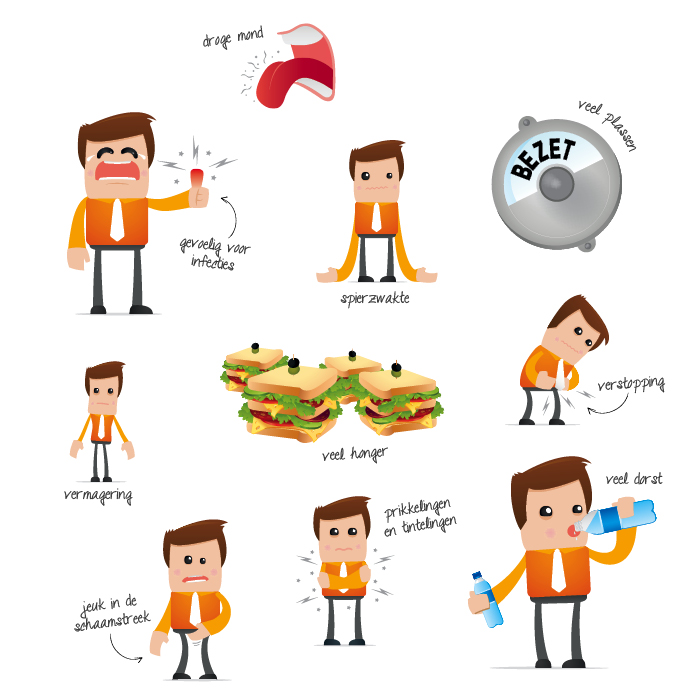
Symptoms of type 1 diabetes
When your blood sugar is too high you need to urinate a lot and you are constantly thirsty with a dry mouth. Without insulin, and because your body's cells receive no sugar (glucose) and lack energy, your body starts breaking down fat cells. This releases acidic chemical substances called ketones, which can be used for energy. The ketones build up in the blood, leading to increasing acidity. The combination of these factors is known as diabetic ketoacidosis (DKA) and can be life-threatening if treatment is not started immediately. It leads to weight loss, fatigue, drowsiness and coma.
Recognise diabetes, in children too! The typical symptoms of type 1 diabetes at a glance:
- Drinking a lot
- Urinating a lot
- Bedwetting again at night or getting up frequently to urinate
- Dry mouth
- Unexplained weight loss, even in those who eat a lot and always feel hungry
- Fatigue