Hormonal problems and type 1 diabetes
Are patients with type 1 diabetes more likely to develop problems in other hormonal organs (glands)?
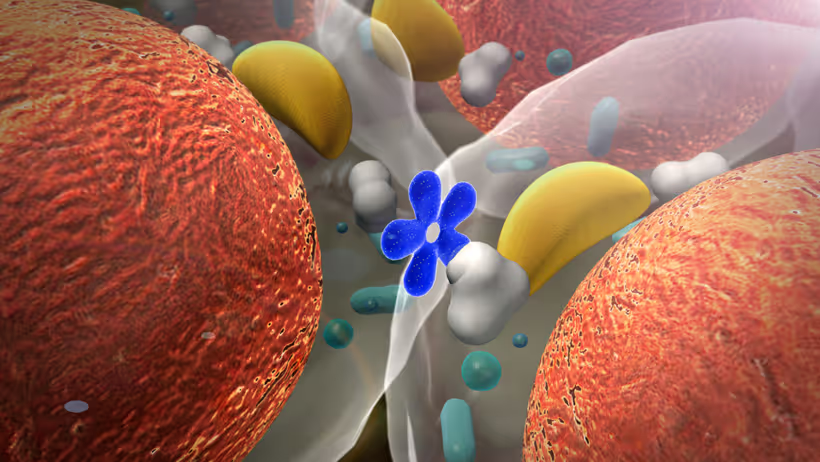
Type 1 diabetes is the result of an attack by the immune system on the body's own tissue (an autoimmune attack) and leads to the destruction of the hormonal function of the pancreas, resulting in a shortage of insulin. Compared with others, people with type 1 diabetes also have a higher risk of an autoimmune attack in other hormonal organs, which then become diseased and release hormones into the bloodstream in a disrupted way.
The diagnosis of type 1 diabetes can come before or after another hormonal condition, or the two can be identified at the same time. As with type 1 diabetes, other hormonal autoimmune conditions can develop at any age, but very rarely before the age of 10.
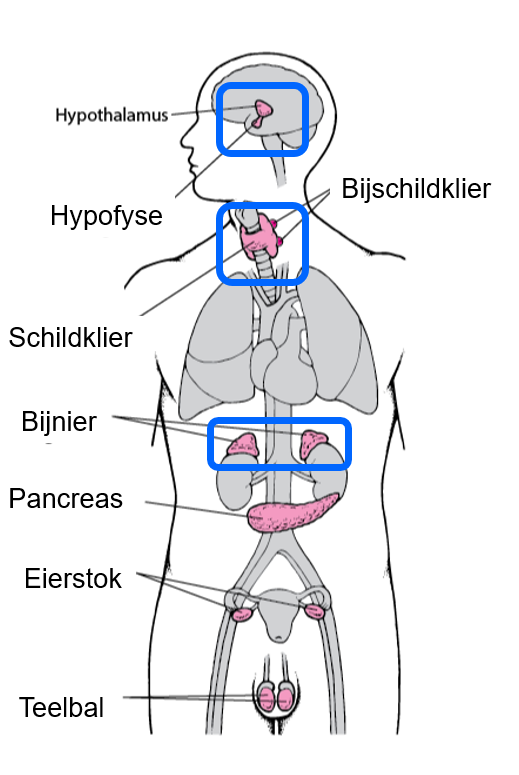
Typical hormonal organs are: the thyroid, the parathyroid glands, the pituitary gland, the adrenal glands and the gonads (ovaries in women, testicles in men).
The thyroid
The thyroid is a small butterfly-shaped organ in the neck, in front of the windpipe. It makes thyroid hormone (T4 and T3) and needs iodine, among other things, as an essential building block. Thyroid hormone is vital for regulating development and growth at a young age, and for metabolism and organ function at every age. During pregnancy and the first months of life, thyroid hormone also plays a crucial role in the baby's development.
Autoimmune thyroid disease is the most common autoimmune condition in the general population, and it is even more common in people with type 1 diabetes. There are various forms of autoimmune thyroid disease, but the most common are Hashimoto's disease and Graves' disease.
Hashimoto's disease - hypothyroidism
Hashimoto's disease usually develops slowly (over several, sometimes several dozen years) and in its final stage causes irreversibly disrupted thyroid function, with a blood test showing too little thyroid hormone, also known as hypothyroidism. In the general population the condition affects around 5% of people; with type 1 diabetes this can rise to around 10-20%. Symptoms may include (but are not necessarily present): feeling cold, hair loss, fatigue, weight gain, reduced fertility. Treatment consists of taking a daily tablet of T4 hormone, for life. The doctor checks the blood regularly and dose adjustments are sometimes needed. During pregnancy a higher dose is required.
Graves' disease – hyperthyroidism
Graves' disease usually develops more quickly (over a few months) and leads to increased production of thyroid hormone, also known as hyperthyroidism. In the general population the condition affects around 1% of people; with type 1 diabetes this can rise to around 5%. Symptoms may include (but are not necessarily present): feeling hot, palpitations, sweating, weight loss, reduced fertility, bulging eyes. Treatment consists of curbing the excessive production of T4. This can be done either with antithyroid medication (usually taken for at least a year), or with a single dose of a radioactive iodine tablet, or by surgical removal of the thyroid (thyroidectomy). The doctor checks the blood regularly. Unlike Hashimoto's disease, Graves' disease can resolve at some point, but there is a risk of flare-up of around 50%. In 10-20% of people with Graves' disease, not only thyroid function is disrupted but also the tissue around the eyes (fat and muscle), which can cause redness, swelling and sometimes even double vision or loss of sight. In the case of eye involvement (thyroid eye disease) it is first and foremost important to get the thyroid hormones under control, to stop smoking (where applicable) and to use artificial tears. The endocrinologist will then look at which additional treatment may be advisable together with the ophthalmologist: sometimes this is radiotherapy, eye surgery, high-dose cortisone, or other medication that acts on the immune system.
In a patient with type 1 diabetes, thyroid function is screened once a year, and additionally in the case of symptoms or signs that suggest a problem, or during pregnancy (or when planning a pregnancy).
The adrenal gland
The adrenal glands are small organs that sit above the kidneys and consist of an outer adrenal cortex and, centrally, the adrenal medulla. The adrenal cortex produces various hormones: glucocorticoids or cortisol (a role in metabolism, the immune system and the response to stress), mineralocorticoids or aldosterone (a role in regulating water and salt balance), and also 'male' hormones such as DHEA. Male hormones are also produced in the gonads (testicles and ovaries). The adrenal medulla produces adrenaline (a role in the response to stress), but this is also produced elsewhere in the body (the autonomic nervous system). Adrenal cortex hormones (glucocorticoids and mineralocorticoids) are vital.
Addison's disease - adrenal insufficiency
Addison's disease probably usually develops quickly (over several months) and leads to irreversibly disrupted production of gluco- and mineralocorticoids. Left untreated, this condition leads to a severe drop in blood pressure (shock). In the general population Addison's disease is fortunately very rare (around 5 in 100,000); in people with type 1 diabetes it is thought to affect around 5 in 1,000. Doctors are alert to this serious condition, but because it is so rare they do not screen for it annually. Treatment consists of taking hydrocortisone daily (a glucocorticoid, typically 2 to 3 tablets spread over the day) as well as a fludrocortisone tablet (a mineralocorticoid, typically 1 tablet a day). In the case of serious illness or surgery, the hydrocortisone dose must be increased, to mimic the body's normal stress response.
Other hormonal autoimmune conditions
Very rarely, autoimmune conditions also develop in other hormonal organs, such as the pituitary gland, the parathyroid glands or the gonads. In recent years this has occurred somewhat more often (particularly autoimmune pituitary disease, sometimes also type 1 diabetes), as a result of certain immunotherapies used in cancer treatment which, by disrupting the immune system, can trigger autoimmune conditions. Oncologists, endocrinologists and GPs are now especially alert to this in cancer patients treated with these drugs.
APS or autoimmune polyglandular syndrome
In some patients, 3 or more hormonal and non-hormonal autoimmune conditions (for example coeliac disease, vitiligo) occur at the same time. In that case we speak of autoimmune polyglandular syndrome, or APS for short. A great deal of research is being done into the underlying (genetic and other) causes. The best-known person to have had APS is president JF Kennedy.
Conclusion
People with type 1 diabetes have an increased risk of developing other autoimmune conditions, and this can happen at any age. Autoimmune thyroid disease is the most common, but the follow-up of people with type 1 diabetes must also pay close attention to the development of less common autoimmune conditions.
Prof. Brigitte Decallonne, Endocrinology, UZ Leuven
26 June 2025